Eadweard Muybridge
1830 – 1904
The photographer who first stopped time and set pictures in motion
Eadweard Muybridge was born Edward James Muggeridge on April 9, 1830, in Kingston upon Thames, England, the son of a grain and coal merchant. As a young man he changed the spelling of his name several times, eventually settling on the archaic-looking "Eadweard Muybridge," which he believed reflected its Anglo-Saxon roots. Around the age of twenty he emigrated to the United States, working as a bookseller and publisher's agent first in New York and then in San Francisco.
In 1860, while traveling east, Muybridge suffered serious head injuries in a stagecoach crash in Texas. He returned to England to recuperate over the next several years, and it was during this period that he took up photography. By the late 1860s he was back in San Francisco, working under the pseudonym "Helios" and quickly earning a reputation for his large-format landscape views.
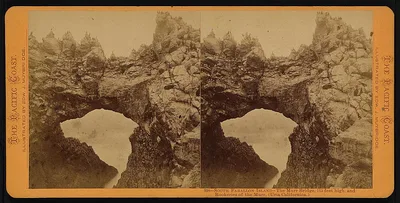
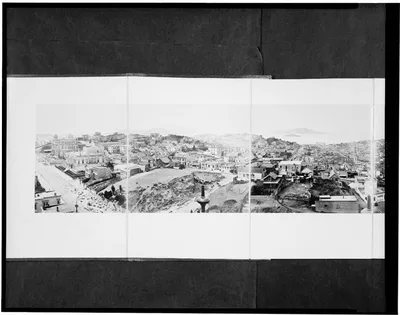
In 1867 Muybridge made his first photographic expedition to the Yosemite Valley, producing dramatic views of the cliffs, waterfalls, and forests that won wide acclaim. He returned in 1872 to photograph the valley again with mammoth-plate cameras, and over the following years recorded lighthouses on the Pacific coast, scenes of the Modoc War, and a celebrated multi-plate panorama of San Francisco made from California Street Hill in 1878.
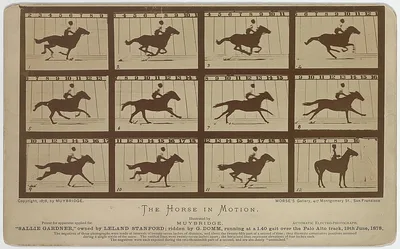
That same decade brought the work for which he is most remembered. The railroad magnate and former California governor Leland Stanford engaged Muybridge to settle a question about the gait of a trotting and galloping horse—specifically whether all four hooves ever leave the ground at once. After years of experiments at Stanford's Palo Alto farm, Muybridge devised a battery of cameras whose shutters were tripped by the horse breaking trip-wires across the track. On June 19, 1878, his sequence of the mare "Sallie Gardner" at a gallop proved that a horse does become completely airborne, overturning centuries of artistic convention.
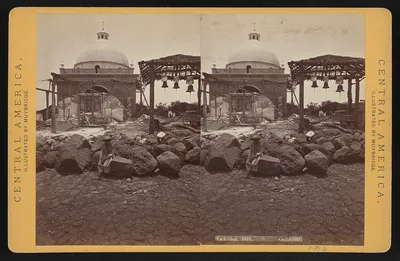
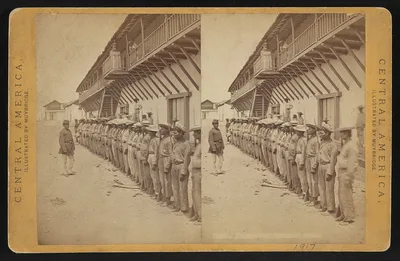
Muybridge's life was also marked by violence. On October 17, 1874, he shot and killed Major Harry Larkyns, a man he believed to be his wife's lover and the father of her child. He was tried for murder and, in February 1875, acquitted by a jury on the grounds of justifiable homicide. He soon left on an extended photographic expedition to Central America before resuming his motion work.
In 1879 Muybridge invented the zoopraxiscope, a device that projected painted sequences from a spinning glass disc to create the illusion of movement—an important ancestor of the motion-picture projector. Between 1883 and 1886, under the patronage of the University of Pennsylvania, he undertook a vast study of humans and animals in motion, producing more than 100,000 images. The results appeared in 1887 as Animal Locomotion, a monumental work of 781 collotype plates. He distilled his findings into the popular books Animals in Motion (1899) and The Human Figure in Motion (1901). Muybridge eventually returned to his native Kingston upon Thames, where he died on May 8, 1904, at the age of seventy-four.
A Career in Images
![Residence of James Rogers at Watsonville, Cal[ifornia], Watsonville, California, 1879](/static/images/2009634101_thumb.webp)
![[A photographing camera and back of electro-shutter], California, Palo Alto, 1881](/static/images/2008680807_thumb.webp)
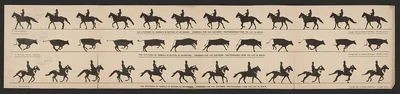
"We have become so accustomed to see [the galloping horse] in art that it has imperceptibly dominated our understanding, and we think the representation to be unimpeachable, until we throw off all our preconceived impressions on one side, and seek the truth by independent observation from Nature herself."
— Eadweard Muybridge